
Sayulita, Mexico: a practical guide to the surf town everyone asks about
Sayulita is a small surf town on the Pacific coast of Mexico, about 40 minutes north of Puerto Vallarta. This guide covers what the town is actually like, how to get there, when to visit, where to stay, and what to do once you are there. You will find practical details a visitor needs, without the brochure language.
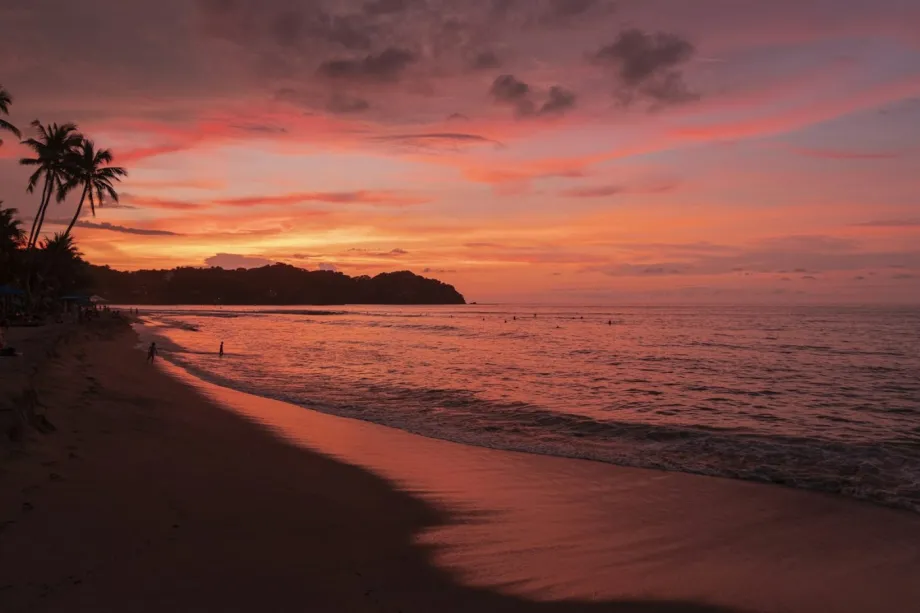
Where is Sayulita and how do you get there from Puerto Vallarta
Sayulita sits on Mexico’s Pacific coast, about 40 kilometres north of Puerto Vallarta, in the state of Nayarit. It belongs to the Riviera Nayarit, the stretch of coastline that runs from just north of the airport all the way up past San Blas. The closest international airport is Licenciado Gustavo Díaz Ordaz International Airport (PVR) in Puerto Vallarta, which is the natural starting point for almost every visitor.
The drive from the airport to Sayulita takes 45 to 60 minutes, depending on traffic. Highway 200 is paved and well maintained, though the last few kilometres before the turnoff can get busy in high season. There are three practical ways to cover that distance.
- Rental car. All the major agencies have desks at PVR. Having your own car gives you freedom to explore the smaller beaches north of town, but parking in Sayulita is tight and the streets are narrow, so check whether your accommodation includes a spot before you book.
- Private transfer or taxi. This is the simplest option if you are travelling with luggage or in a group. You can book a transfer online before you fly or take an authorised airport taxi from the stand just outside the terminal. The fare is fixed and the journey is direct.
- Public bus. The Compostela-Puerto Vallarta bus leaves from the airport area and from the main bus station in town. It is the cheapest way to reach Sayulita, but it makes stops along the way and can take closer to 90 minutes. Luggage goes in the compartment underneath, and you pay the driver in pesos.
Once you arrive, the centre of Sayulita is walkable from the bus stop and from most of the parking areas. If your accommodation is up in the hills on the north or south side, a short taxi ride from the plaza will get you there in a few minutes.
What is Sayulita actually like as a town
Sayulita is a small coastal town of about 5,000 permanent residents, set in a valley where a jungle-lined river meets a crescent of sand. The centre is compact enough to walk across in fifteen minutes. Most streets are cobbled and narrow, with no traffic lights, and golf carts share the road with delivery trucks and the occasional horse. The town has grown fast over the last decade, but the layout still follows the original fishing village grid: a handful of parallel streets running inland from the beach, crossed by a few longer roads that climb the hills on either side.
The main beach, Playa Sayulita, anchors the town's daily rhythm. Mornings start quietly, with surfers in the water by sunrise and a few vendors setting up under the palm trees. By mid-morning the sand fills with umbrellas, families, and surf schools. The plaza, a shaded square two blocks back from the water, serves as the town's living room. In the evening it fills with locals and visitors eating from food carts, kids running between the benches, and a low hum of conversation that lasts until the taco stands pack up around ten.
Sayulita is a working town, not a manicured resort. The streets kick up dust in the dry months and turn to mud after a heavy rain. Roosters start calling well before dawn in some neighbourhoods, and construction noise is a fact of life in the high season. Power and water outages happen, usually short ones, and the town's infrastructure strains visibly under the winter crowds. The atmosphere is informal and a little rough around the edges: you will see potholes, unpainted walls, and the occasional pile of building rubble next to a newly opened café.
The mix of people defines the place as much as the setting. Alongside the Mexican families who have lived here for generations, you will find surfers from California and Australia, Canadian retirees, young Europeans working remotely, and a steady stream of week-long visitors from Guadalajara and Mexico City. English is widely spoken in shops and restaurants near the plaza, but Spanish remains the default once you step a street or two back from the beach. The result is a town that feels international without losing its Mexican soul: a place where a fisherman mends his net on the sand a hundred metres from a yoga studio, and nobody finds it strange.
When is the best time to visit Sayulita
The dry season, from November to May, brings warm days around 28 °C, low humidity and almost no rain. This is the busiest period, with prices at their highest from mid-December through early January and again around Easter week. Surf is consistent but smaller, which suits beginners and longboarders. If you want the classic postcard weather and do not mind sharing the beach, book for February or March, when the holiday crowds have thinned but the sun still holds.
The rainy season runs June to October. Mornings are often clear and hot, with heavy showers arriving in the late afternoon or overnight, rarely lasting more than a couple of hours. The landscape turns deep green, the town empties out and accommodation rates drop noticeably. Surf picks up too, with south swells bringing overhead sets from July through September. The trade-off is humidity: you will feel it, especially in August and September, when air conditioning becomes more than a luxury.
The hurricane window officially spans June to November, with the highest chance of a storm passing near the coast in September and early October. For a visitor this rarely means a direct hit. It usually means a day or two of steady rain, some localised street flooding and surf that becomes unrideable chop. Keep an eye on the forecast, but do not let the words "hurricane season" scare you off. Most of the rainy months are perfectly fine for travel, and some of the best surf days happen right before a storm moves in.
Where to stay in Sayulita: neighbourhoods and accommodation types
Sayulita is compact enough that you can walk from one end to the other in about 20 minutes, but where you stay makes a real difference to the character of your visit. The town splits naturally into four zones: the centre around the plaza, the north side past the bridge, the south side toward the beach clubs, and the hills that wrap around the bay. Each has a distinct feel, and the accommodation varies from surf hostels to standalone villas.
The town centre is steps from the plaza, restaurants, and the main surf break. It is the most convenient base, but also the noisiest. Roosters, late-night music, and delivery trucks at dawn are part of the package. You will find small hotels, guesthouses, and a few older apartment blocks here, rarely anything built after 2010. The north side across the bridge is quieter and slightly more residential. Streets are unpaved in places, the pace is slower, and you are still a 10-minute walk from the centre. This is where many of the private casitas sit, often tucked behind a family home with a small plunge pool.
The south side runs along the beach toward Playa de los Muertos and the beach clubs. It draws people who want a sea view and are happy to pay for it. Walkability is good along the shore path, but the hill climb back from the beach can be steep. Accommodation here leans toward mid-range hotels and newer condominium blocks. The hills above town offer the best views and the most space, with larger villas and a handful of boutique rentals. You trade walkability for privacy: the roads are steep, and you will rely on a golf cart or your legs to get down to town.
- The town centre gives you immediate access to restaurants and the surf break, but expect noise from the plaza and early-morning roosters.
- The north side is the quiet residential option, with a cluster of private casitas and a relaxed 10-minute walk to the centre.
- The south side offers beachfront and ocean-view hotels and condos, with a steep climb back from the shore path.
- The hills provide the most space and the best bay views, suited to villas and boutique stays where you trade walkability for privacy.
Choosing between a small inn and a standalone rental changes the rhythm of your stay more than the neighbourhood itself. We have a detailed comparison of a bed and breakfast and a private casita that walks through the practical differences, from meal arrangements to how much interaction you can expect with your hosts.
What can you do in and around Sayulita
Surfing is the reason many people come to Sayulita in the first place. The main beach break is a consistent right-hand point with a sandy bottom that works on most swells, and the wave stays forgiving enough for beginners while keeping better surfers interested on bigger days. Several surf shops on the beach road rent soft-tops and mid-length boards by the hour or by the week, and local instructors run lessons right off the sand. If you want a quieter session, a short walk north to Playa de los Muertos puts you on a smaller beach with a left-hand break that picks up less crowd.
The town itself rewards walking without a plan. The streets around the plaza fill with stalls selling tacos al pastor, fresh coconut water and churros from late afternoon onward, and the sound of live music spills out of bars on the side streets most evenings. Eating here means moving between casual taco stands, seafood spots on the beach and a handful of small restaurants that cook Nayarit-style zarandeado fish over open coals. The weekly Friday market on Calle Revolución brings together local produce, baked goods and handmade textiles, and it is worth timing a visit around it if your stay covers a weekend.
- Surf lessons and board rental at the main beach break, with beginner-friendly waves and local instructors available daily.
- Day trips to the surf breaks at San Pancho and the quieter beach at Lo de Marcos, both under half an hour by taxi or bus.
- Whale watching on boat trips out of Punta de Mita from late December through March, when humpbacks migrate past the bay.
- Snorkelling trips to the Marietas Islands, a protected marine reserve with a hidden beach accessible by swimming through a cave.
- Walking the jungle trail to Playa Malpaso, a small cove south of town that stays uncrowded even in high season.
- Horseback riding on the beach north of town, with stables that take riders of all levels along the sand and into the hills.
For a change of pace, San Pancho sits ten minutes up the coast and offers a different rhythm with a long, open beach and a cultural centre that runs workshops and film screenings. Further south, Punta de Mita gives you access to the Marietas Islands and some of the best snorkelling on this stretch of the Riviera Nayarit. If you are choosing between a bed and breakfast and a private rental, your base affects how easily you can store boards, rinse wetsuits and leave early for a day trip without disturbing anyone.
How safe is Sayulita and what should a visitor watch out for
Sayulita is a safe town for visitors who take the same practical precautions they would in any busy beach destination. Violent crime against tourists is rare. The everyday risks that catch people out are petty theft, strong surf, and occasional stomach upsets from tap water or street food. A solo traveller will feel comfortable walking the central streets after dark, while a family's main concern is keeping an eye on children near the waves.
Petty theft is the most common nuisance. Do not leave a phone, wallet or beach bag unattended on the sand, even for a few minutes. Lock valuables in your accommodation rather than leaving them visible in a parked car. Most casitas and bed and breakfast properties have a safe or a lockable cupboard, and hosts will tell you which beaches need extra vigilance. Theft is opportunistic, not confrontational.
Ocean safety deserves more attention than street safety. Sayulita's main beach has a river mouth that can create strong rip currents, especially after rain. The surf breaks are intermediate to advanced, and a beginner who paddles out past the inside reform risks getting into trouble. Watch for the coloured flags on the beach and ask a local instructor about the conditions before entering the water. If you are travelling with children, the north end of the main beach tends to be gentler, but no part of the bay is a supervised swimming pool.
- Do not drink tap water anywhere in town. Use bottled or filtered water, and check that your accommodation provides a garrafón or a filtration system.
- Wash fruit with purified water and avoid raw salads from street stalls unless you can see how they are prepared.
- Carry a photocopy of your passport and leave the original locked in your room.
- Use a waterproof phone pouch when swimming, not just for theft but because a wave will pull an unsecured phone out of a pocket.
- Apply reef-safe sunscreen and reapply after swimming. The sun in Sayulita burns faster than most visitors expect.
What do you need to know about money, internet, and getting around without a car
Cash is the default in Sayulita. Several ATMs sit along Avenida Revolución, but they can run out on busy weekends, so withdraw enough for a few days. Most restaurants and shops accept cards, though a handful of taco stands and market stalls are cash only. You will get a better exchange rate by withdrawing pesos directly from a Mexican bank ATM rather than bringing dollars and changing them at a booth.
Mobile coverage is generally reliable in town. Telcel has the strongest signal along the beach and in the plaza; other networks can be patchy inside concrete buildings. Wi-Fi at cafes and guesthouses is usually stable enough for video calls, but speeds drop when the whole town is online in the evening. Download offline maps before you arrive, because the signal fades quickly on the jungle roads heading toward San Pancho.
You do not need a car in Sayulita. The town is compact and you can walk from the north end of the beach to the south end in under twenty minutes. For longer trips, the local bus to San Pancho and Lo de Marcos costs a few pesos and leaves from the highway every fifteen minutes. A taxi to Punta Mita or La Cruz takes about twenty minutes. The real local transport is the golf cart: rental shops are everywhere, and a cart lets you carry surfboards, groceries, and tired children without hunting for parking.
- Use the Santander or Banorte ATMs on Avenida Revolución, not the standalone machines inside convenience stores.
- Tell your bank you are travelling before you leave so your card is not blocked on the first withdrawal.
- Buy a Telcel SIM at the OXXO near the plaza if your roaming data is slow.
- Ask your accommodation host about their backup internet setup if you plan to work remotely.
- Book a golf cart a day ahead during holidays, because the rental fleets sell out by mid-morning.
Frequently asked questions
Is Sayulita good for families with small children?
Yes, but it helps to choose your location carefully. The main beach has a gentle shore break that is fine for wading, though the surf can get strong in the afternoons. Families often prefer the north side of town or a place a short walk from the plaza, where the streets are a little quieter. The town itself is compact and walkable with a stroller on the paved streets, though the cobblestones and dust can be a challenge on the unpaved ones.
Can you visit Sayulita on a day trip from Puerto Vallarta?
Yes, the drive takes about 40 to 50 minutes each way, so a day trip is perfectly doable. You can take a public bus from the Walmart parking lot near the airport, hire a taxi, or book a private driver. Many people come just for the day to surf, eat, and walk the beach. The last bus back to Puerto Vallarta leaves in the early evening, so check the schedule before you go if you plan to use public transport.
Does Sayulita have good Wi-Fi for remote work?
Wi-Fi in Sayulita has improved a lot, but it is not uniformly reliable. Many cafes and restaurants offer decent connections, and newer accommodation tends to have dedicated fibre lines. Power outages are rare but do happen during summer storms. If your work depends on a rock-solid connection, ask your host for a speed test screenshot before you book and bring a local SIM card as a backup hotspot.
Is the water safe to drink in Sayulita?
Tap water is not considered safe to drink. Most visitors use bottled water for drinking and brushing their teeth. Many rental properties provide large garrafones, the refillable 20-litre jugs common throughout Mexico. The town has had well-publicised water quality issues in the past, and while the local government has invested in improvements, sticking to bottled water is the standard advice.