
Humpback whale season on the Riviera Nayarit
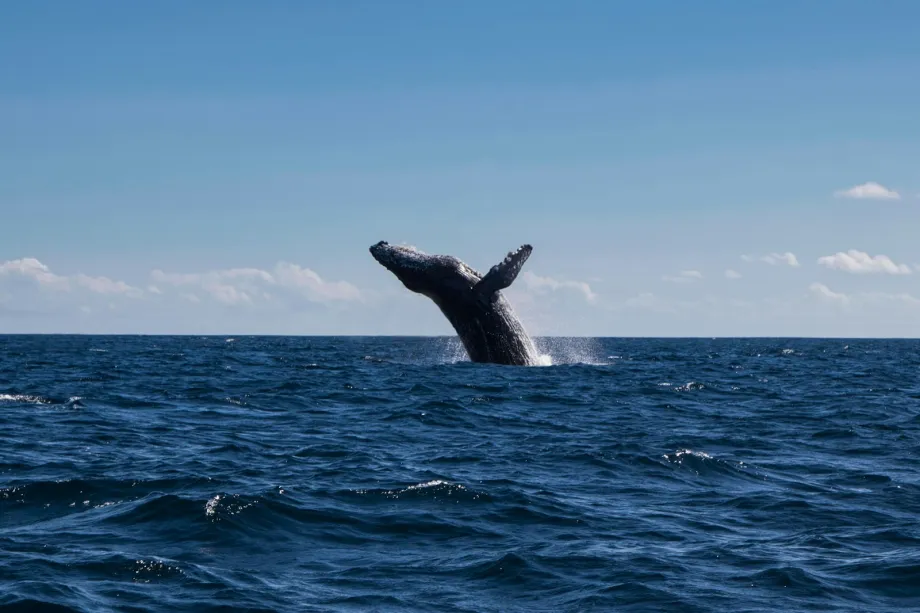
A spout of mist on the horizon, then a tail lifting clear of the water. Every winter humpback whales come to the warm waters off the Riviera Nayarit to mate and raise calves, and you can watch them from a boat or from shore.
Why the whales come
Each winter, humpback whales travel from feeding grounds in the cold North Pacific to the warm coastal waters of Mexico. Banderas Bay and the coast north of it, including the waters off Jaltemba Bay, are among the places they gather.
Humpbacks spend the summer feeding in cold, food-rich seas far to the north. When winter comes, many of them head south. They eat little in the tropics. Instead, the warm water is where they mate, give birth and nurse their young.
Males compete for females with long, complex songs and showy surface displays. Calves are born after a pregnancy of about a year and spend their first weeks close to their mothers, building strength for the long trip north. Calm, sheltered water near the coast suits that early stage of life.
When to go
The season usually runs from about December to March, and Mexican authorities set the official whale-watching dates each year. A few whales may turn up earlier or linger later.
Early in the season, adults arrive and activity builds. The middle of winter is often the liveliest time, with breaches, tail slaps and groups of males chasing a female. Later on, mothers with growing calves become a common sight. Exact timing varies from year to year, so ask locally when you arrive.
How boat trips work
Whale-watching trips run through the season from many places on the bay and the coast to the north, from Punta de Mita and the towns around Banderas Bay to Sayulita and Jaltemba Bay. Trips usually last a few hours.
Small boats or larger vessels
You can go out in a panga, the small open fiberglass boat with an outboard motor, or on a larger boat or catamaran.
Pangas carry a small group and sit low on the water, so you feel close to the sea and can talk easily with the captain. Larger boats are steadier, offer shade and often a toilet, and suit families with small children or anyone prone to seasickness.
On the water
Morning trips often have the calmest sea. Once out, the captain heads for areas where whales have been seen, and everyone scans the horizon. A puff of mist marks a whale breathing. A burst of white water usually means a breach or a tail slap.
Good guides talk about humpback behavior, migration and conservation while you search. Some boats carry a hydrophone, an underwater microphone, so you can hear a male singing nearby. When whales are found, the captain slows down and approaches gradually from the side or behind, never head-on.
The rules
Mexico regulates whale watching to protect the animals. The rules limit how close boats may approach, how fast they may travel near whales, how many boats can be with a group at once and how long they can stay. Mothers with calves get extra space. Boats may not chase whales, cut across their path, trap them against the shore or encircle them.
These limits reduce stress on mothers and calves and help prevent collisions. Knowing that they exist explains why a good captain holds back rather than racing toward a whale.
Choosing a responsible operator
Look for the permit
SEMARNAT, Mexico's environment ministry, issues permits to authorized whale-watching operators each season. Permitted boats normally display their authorization, and a reputable operator will be happy to show it. Unlicensed boats are more likely to break the distance rules.
Watch how the captain behaves
Responsible crews put the whales first. The engine should idle or go into neutral close to whales, and if a curious whale approaches the boat, a good captain cuts power and waits.
Be wary of anyone who promises close encounters, chases whales that are moving away or joins a crowd of boats around one group. If a crew behaves badly, say so, and consider reporting it to the authorities or local conservation groups.
Research and education
Some operators work with researchers or conservation groups. Photographs of the underside of a humpback's tail, which has a unique black and white pattern, are used to identify individual whales and follow them over the years. Choosing a trip linked to this kind of work supports it directly.
Watching from shore
You do not need to go out on a boat at all. This coast has plenty of headlands, bluffs and long beaches with wide views of the sea.
Where to look from
The headlands around Punta de Mita look across Banderas Bay toward the Marietas Islands. Farther north, the hills around Sayulita and San Pancho and the rocky points around Jaltemba Bay make good lookouts. Any terrace, rooftop or balcony facing the ocean can work too, especially early in the morning.
What to look for
Scan the water slowly in wide horizontal sweeps rather than staring at one spot. A blow is a column of mist as the whale breathes out, and on a still morning it can be seen from far away. A breach is the whole body launching out of the water and crashing back. Tail slaps and fin slaps throw up bright splashes, and a smooth, glassy patch on the surface often marks where a whale has just dived.
A pair of binoculars or a camera with a long lens makes shore watching much more rewarding. Calm mornings, before the breeze ruffles the surface, are best. Watching from land lets you enjoy the season at your own pace without disturbing the whales at all.
Frequently asked questions
When is whale season on the Riviera Nayarit?
Roughly December to March. The official season is set each year by Mexican authorities, and the exact dates and the busiest weeks vary, so check locally before you plan around it.
Do I need a boat to see whales?
No. Blows and breaches are often visible from headlands, bluffs and beaches, especially on calm mornings. Binoculars help a great deal.
How can I tell if a whale-watching tour is responsible?
Ask whether the operator holds a current whale-watching permit from SEMARNAT, Mexico's environment ministry. Permitted boats usually display it. Good crews approach slowly, keep their distance and never chase or surround whales.