What is the main difference between a condo and a villa for a family?
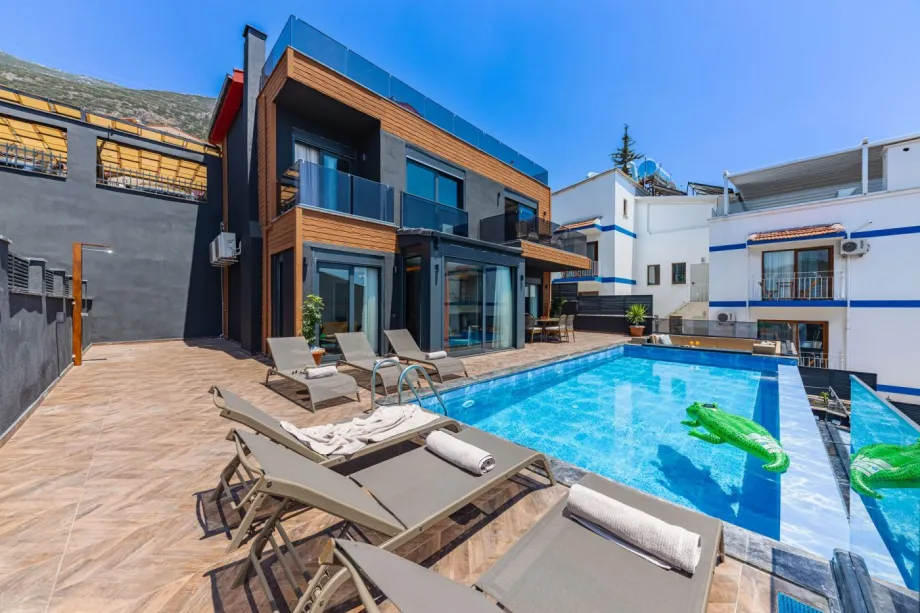
A condo puts your family in a multi-unit building where you share walls, hallways, and recreational facilities with other guests and residents. A villa is a standalone house on its own lot, with no shared indoor spaces and a private outdoor area that belongs only to your group.
For a family, the practical difference comes down to privacy and how you spend time together. In a condo, the pool, garden, and gym are common areas you use alongside strangers. In a villa, your children can run from the living room straight into a private pool without crossing a lobby or waiting for an elevator. The kitchen, terrace, and yard are yours alone for the entire stay.
Which gives my family more space, a condo or a villa?
A standalone villa almost always provides more square footage than a condo. You get multiple bedrooms spread across separate floors, a full kitchen, a living room and a private yard or garden. That extra outdoor space matters when kids need room to play without leaving the property. A three-bedroom villa in the Versalles or Amapas neighborhoods typically offers 200-350 m² of total living area, while a similarly priced three-bedroom condo in the Hotel Zone or Marina Vallarta runs 120-180 m².
A condo trades the yard for a large terrace or balcony and keeps everything on one level. That open-plan layout can work for a family with one small child, but two or three kids often need the separation a villa provides. A private pool in a villa also gives children a place to swim without sharing a common area with other guests.
What amenities can we expect in a condo versus a villa?
A condo complex bundles shared facilities maintained by the HOA, so you get resort-style perks without arranging anything yourself. A standalone villa swaps those shared features for privacy and space you control entirely.
- Pool. Condos offer one or more shared pools, often with a shallow section for kids. A villa almost always has a private pool that your family can use at any hour, plus a sun deck with loungers.
- Kitchen and dining. Both come with a full kitchen, but a villa kitchen is typically larger and opens onto a private terrace or garden with a grill and an outdoor dining table. A condo kitchen is more compact and the balcony may have a small bistro set.
- Gym and recreation. Mid-range and upscale condo buildings include a fitness room, and larger complexes may add a kids’ play area or a tennis court. Villas rarely have a gym, though a few luxury properties install a small one.
- Security. Condos have 24-hour front-desk staff or a guarded gate as part of the building. A villa usually relies on a lockbox or keypad entry, though many are inside gated communities with a shared guard at the entrance.
- Outdoor space. A condo gives you a furnished balcony or terrace with a view. A villa adds a private garden, often walled, where children can play while you cook or read a few steps away.
- Housekeeping and maintenance. A condo rental normally includes light daily cleaning and a maintenance team on site. A villa provides housekeeping on a set schedule, and the rental manager handles any repairs.
If your family will spend most of the day at the beach and you want a pool, a gym and security handled for you, a condo’s package of amenities is hard to beat. When cooking together, splashing in a private pool and letting kids run in a garden matter more, a villa fits better.
Which option costs less for a family vacation?
A condo in Puerto Vallarta almost always costs less per night than a standalone villa of comparable quality. For a family of four or five, a two-bedroom condo keeps the total bill down, and you save on meals because the compact kitchen makes cooking simple and quick. You are not paying for private outdoor space you may not use every day.
A villa costs more upfront, but the math shifts when you travel with a larger group. Splitting a four-bedroom villa among two or three families often drops the per-person cost below what each would pay for separate condos. You also get a private pool and a full indoor-outdoor living area, which can replace paid outings on days when the kids just want to swim and play at the house.
Condos work well when your family is small and you want to keep fixed accommodation costs low. Villas become the cheaper choice per head once your group fills four or more bedrooms, especially during the high season when hotel and condo rates rise faster than villa rates.
Is a condo or a villa safer for small children?
Both can be safe, but the risks differ. In a condo, the main hazards are a high balcony and a shared pool with no lifeguard. Most condo buildings in Puerto Vallarta have a railing, yet a toddler can still slip through if the gap between bars is wide or a chair is left near the edge.
A private villa gives you full control of the environment, the biggest advantage for parents. You can block stairways, secure the yard gate and set your own pool rules. The trade-off is that nobody else is watching the water. A private pool without a safety fence needs constant adult attention, because a child can reach it in seconds from an open patio door.
- Check the balcony railing spacing before you book a condo. A gap wider than 4 inches is a risk for a small child.
- Ask whether the condo building has a pool fence or a self-locking gate, as most do not.
- In a villa, verify if a pool safety fence is already installed or if the owner can provide one.
- Look for a single-level villa or one where the children’s bedroom is on the ground floor, away from open stairs.
- Bring a portable door alarm for the patio slider so you hear it open, no matter which type of rental you choose.
Which location works better for families who want to walk to the beach and restaurants?
A condo puts your family right where the action is. Most Puerto Vallarta condos sit in the Hotel Zone or the Romantic Zone, so you can walk out the door and be on the sand in two minutes. The malecón, grocery stores and dozens of restaurants are all within a few flat blocks.
A villa gives you a different kind of location. Villas cluster in hillside residential areas like Conchas Chinas or Amapas, where the views are spectacular but the streets are steep and winding. Walking to dinner with a stroller or a tired four-year-old is not realistic. You will need a taxi or a rental car for nearly every outing, which adds time and hassle to your day.
If your family likes to split up during the day and let different people go to the beach, grab a coffee or run back to the room on their own schedule, a condo in the flat central neighborhoods is the simpler choice.
Frequently asked questions
Do Puerto Vallarta condos have washing machines?
Most newer condo rentals include a washer and dryer inside the unit. Older buildings may have a shared laundry room on the ground floor. Check the listing details before booking, especially for a long stay with kids.
Can we get a villa with a heated pool?
Many villas offer pool heating, usually for an extra daily charge. The cost depends on the pool size and the season. Ask the owner or manager when you inquire so the pool is warm when you arrive.
Are condos quieter than villas?
Not always. A condo near the malecón or a busy pool deck can be noisier than a villa tucked into the hills. A villa gives you no shared walls, so you avoid noise from neighboring units entirely.
Do we need a car if we rent a villa?
Most villas sit in residential areas uphill from the beach and the main restaurants. A rental car or regular taxi rides make getting around easier. Some families prefer a car for grocery runs and day trips to Sayulita or San Pancho.